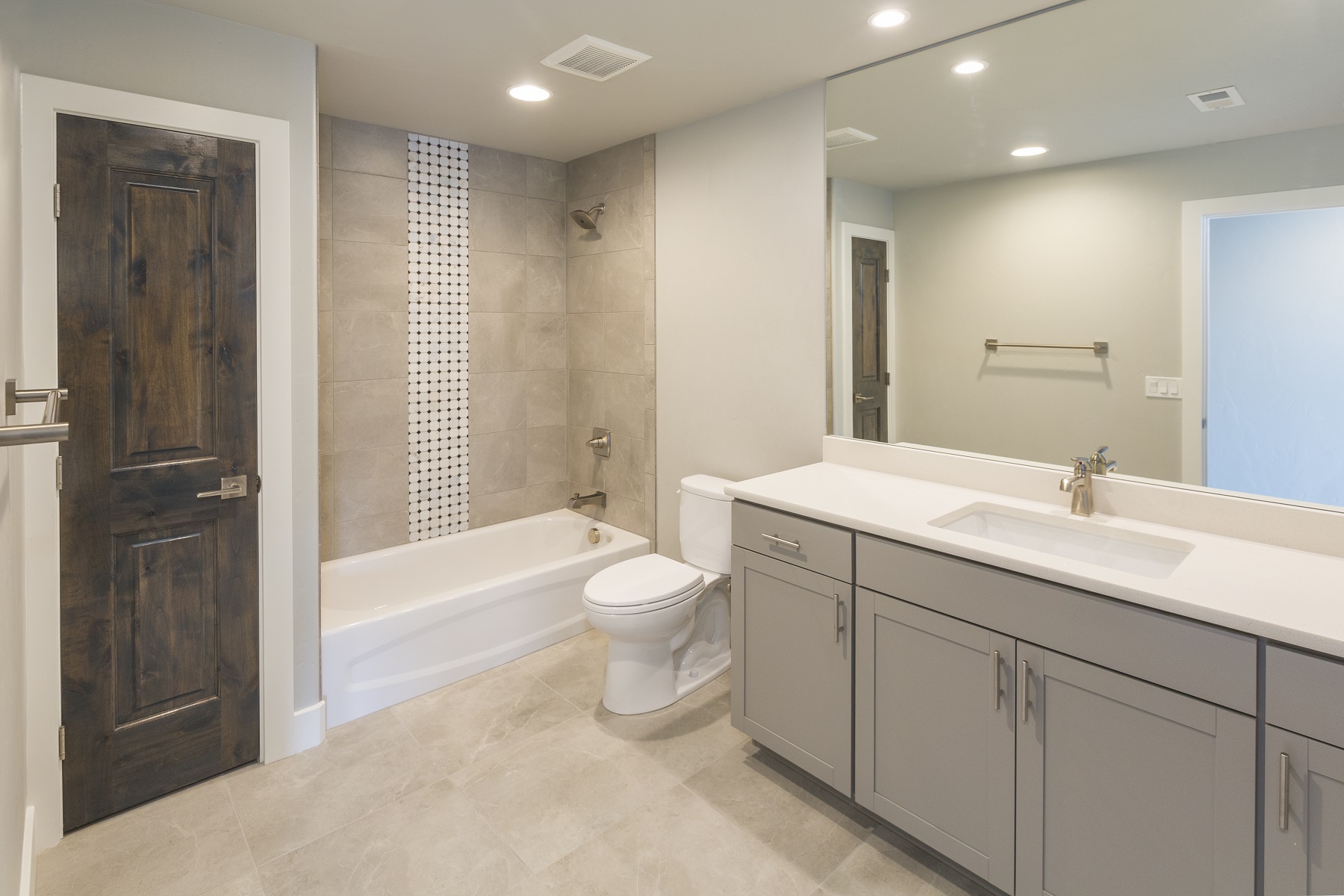



Running out of elbow room in your bathroom? You’re not alone. Tight bathrooms frustrate homeowners every day, but you don’t need to knock down walls or add square footage to create a more spacious feel. Smart bathroom space planning transforms cramped quarters into functional, beautiful retreats.
Let’s explore 10 proven ways to maximize your space during your next bathroom remodel. These ideas work whether you’re refreshing a powder room or completely overhauling your master bath.
1. Go Vertical Bathroom Space
When floor bathroom space runs short, look up. Wall-mounted fixtures free up precious square footage while creating a sleek, modern aesthetic that makes rooms feel larger.
Floating Vanities Create Breathing Room
Custom vanity units that hang on walls rather than sit on floors open up visual space underneath. This exposed floor area tricks your eye into perceiving more room than actually exists. You can sweep or mop right underneath, too, making cleaning easier.
Floating vanities work in any bathroom design style, from ultra-modern to transitional. Choose depths between 18 and 21 inches for compact spaces rather than standard 24-inch depths. That saved six inches makes a surprising difference in tight quarters.
Wall-Hung Toilets Save Big
Wall-hung toilets with concealed tanks reduce the footprint considerably since the water tank hides behind the wall. These space-savers work in 2×6 wall construction and provide sleek profiles that enhance minimalist bathroom ideas.
According to Houzz‘s 2025 Bathroom Trends Study, wall-mounted fixtures continue gaining popularity as homeowners prioritize accessibility and modern aesthetics in their remodels.
Mount Storage Solutions
Instead of freestanding cabinets eating up floor space, mount shelves, medicine cabinets, and towel holders directly on the walls. Over-the-toilet storage units, floating shelves beside mirrors, and recessed niches all provide storage without consuming valuable bathroom space.
2. Install Pocket or Sliding Doors
Swinging doors demand clearance circles that waste considerable bathroom space. Sure, they don’t take up space when closed, but open doors create obstacles and limit furniture placement.
Pocket doors slide completely into walls, disappearing entirely when open. This frees up the entire door swing area for other uses. Sliding barn-style doors work beautifully, too, adding character while saving space.
Apply this same logic to shower doors. Swinging shower doors need room to open without banging into toilets or vanities. Frameless sliding glass doors or completely doorless walk-in showers maximize usable square footage.
3. Embrace Corner Fixtures and Layouts
Corners often go unused in bathroom design, but smart planning turns these dead zones into functional areas.
Corner Vanities Add Interest
Not only do corner vanities help conserve bathroom space, but they also create interesting focal points you won’t find in typical rectangular layouts. Hang an antique mirror or statement light fixture in the corner to emphasize this unique placement.
Corner sinks work especially well in powder rooms where you need just enough washing space without dedicating an entire wall to a full vanity.
Utilize Corner Showers
Corner shower enclosures with curved or angled fronts fit neatly into tight spots while providing adequate showering room. Built-in corner benches inside showers add comfort without protruding into the main bathroom space.
This layout creates a neat triangle that still leaves floor area for vanities and toilets, maximizing every inch efficiently.
4. Create a Wet Room Design
Wet rooms are taking bathroom trends by storm, and for good reason. These open-concept designs eliminate traditional shower enclosures entirely, creating one continuous waterproof space.
Half of homeowners who installed wet rooms cited better use of bathroom space as their primary motivation, according to industry research. Without walls or curbs dividing the room, everything flows together visually, making spaces feel significantly larger.
Wet rooms require proper waterproofing across all surfaces, but they deliver multiple benefits beyond space savings. Curbless entries improve accessibility for aging-in-place planning. The seamless design looks elegantly modern. Cleaning becomes simpler without shower door tracks collecting grime.
Consider partial wet rooms if going fully open feels too bold. A glass panel blocking most splashes while leaving one side open provides functionality without completely closing off the space.
5. Use Large Mirrors Strategically
Mirrors rank among the simplest yet most effective tricks for expanding bathroom space visually. Reflected light and images create illusions of depth and openness.
Floor-to-Ceiling Mirrors Double Perceived Space
Installing mirrors from counter height to ceiling makes walls appear twice as tall. This vertical emphasis draws eyes upward, creating impressions of grandeur even in modest-sized bathrooms.
Position mirrors to reflect windows or light sources, bouncing natural illumination throughout the room. This brightness makes spaces feel more open and welcoming.
Medicine Cabinets With Mirrored Fronts
Swap standard medicine cabinets for mirrored versions. You gain storage inside while maintaining the space-expanding benefits of reflective surfaces on the outside. It’s a function meeting form at its finest.
6. Install Built-In Storage Solutions
Bathroom storage challenges plague small spaces, but built-in solutions provide storage without consuming extra room.
Recessed Niches Save Precious Inches
Built-in niches carved into shower walls or beside tubs create covert storage shelves that don’t intrude on already limited bathroom space. Use the same tiles or finishes for niches that appear on surrounding walls for a cohesive appearance.
These tucked-away shelves hold shampoo, soap, and other necessities without requiring bulky caddies or corner units that make showers feel cramped.
Between-Stud Shelving Maximizes Walls
The space between wall studs (typically 14.5 inches wide) offers hidden storage potential. Build shallow shelving units into these cavities for toiletries, towels, or decorative items. These additions provide function without stealing any bathroom space from the room itself.
7. Choose Neutral Palettes for Your Bathroom Space
Bathroom color choices dramatically impact perceived size. Light, neutral palettes make spaces feel more open and airy than dark, heavy colors.
Whites, soft grays, light blues, and warm beiges visually expand bathroom space by reflecting light rather than absorbing it. These shades create tranquil, spacious feelings even in the smallest bathrooms.
Don’t interpret “light colors” as boring, though. You can add personality through:
- Textured tiles in neutral tones
- Patterned wallpaper in soft hues
- Colorful accessories and towels
- Statement light fixtures
- Artwork and decorative elements
The key is keeping major surfaces (walls, floors, large fixtures) in lighter tones while adding pops of color through easily changeable elements.
8. Opt for Frameless Glass Shower Enclosures
Frameless glass showers create seamless visual flow in bathroom design. Without chunky frames or opaque materials breaking up sightlines, these enclosures allow eyes to travel through entire spaces uninterrupted.
This shower remodeling choice works especially well in smaller bathrooms where every visual trick counts. Clear glass makes shower areas feel like natural extensions of the room rather than separate, boxed-off sections.
Frameless doesn’t mean flimsy. Thick tempered glass (typically 3/8 to 1/2 inch) provides sturdy, safe enclosures. Minimal hardware maintains clean aesthetics while ensuring stability.
For maximum bathroom space optimization, consider completely doorless walk-in showers. A single fixed glass panel blocks most water while the open side serves as your entry, eliminating door swing requirements entirely.
9. Incorporate Multifunctional Fixtures
Bathroom products that serve multiple purposes maximize functionality without requiring extra bathroom space.
Vanities With Integrated Storage
Look for vanity designs incorporating drawer organizers, pull-out shelves, tilt-out trays, and built-in electrical outlets. These features eliminate the need for separate storage furniture or countertop organizers.
Under-sink cabinets benefit enormously from expandable shelving units designed to work around plumbing. Pull-out drawers make items in the back easily accessible without wasting any cubic inch of storage potential.
Combination Mirror-Medicine Cabinets
Why choose between a large mirror and adequate storage when you can have both? Oversized medicine cabinets with mirrored fronts provide generous reflection surfaces while hiding substantial storage behind them.
Toilet-Topper Shelving
The area above the toilets offers prime real estate for shelving units. Built-in cabinets or floating shelves here provide storage exactly where you need it without consuming any additional floor space.
10. Maximize Natural Light and Layered Lighting
Brightness expands bathroom space perceptually. Dark rooms feel cramped regardless of actual dimensions, while well-lit spaces feel open and inviting.
Bring In Natural Light
If your layout allows, add windows or skylights to flood the bathroom space with daylight. Even small additions make dramatic differences. Frosted or textured glass provides privacy while still admitting light.
Extend existing windows down to countertop level when possible. This maximizes light flow and creates interesting design opportunities, like positioning vanities directly under windows.
Layer Artificial Lighting
According to HGTV‘s bathroom design experts, successful bathroom remodeling ideas and design incorporate four types of lighting: ambient (overall illumination), task (focused work light), accent (highlighting features), and decorative (statement fixtures).
Recessed ceiling lights provide general brightness without hanging fixtures, reducing head clearance. Under-cabinet LED strips illuminate vanity counters. Sconces flanking mirrors eliminate shadows on faces. These layers work together, creating well-lit spaces that feel substantially larger.
Work With Experienced Professionals
Best bathroom and kitchen remodelers bring expertise that maximizes your investment. They understand how to optimize layouts, recommend space-saving fixtures, and execute installations that look professional and function perfectly.
A skilled remodeling company can identify opportunities you might miss. They know which walls can move, where plumbing relocates most economically, and how to solve tricky challenges specific to your home’s construction.
Professional designers help you design your shower and bath spaces that balance aesthetics with function. They prevent costly mistakes and ensure your remodel delivers the bathroom space improvements you’re envisioning.
Transform Your Bathroom Into a Spacious Retreat
Creating the best bathroom doesn’t require adding square footage. The bathroom features you choose should reflect your lifestyle needs while maximizing every available inch.
Ready to discover how much bathroom space you can actually gain? Mega Kitchen and Bath specializes in creating beautifully designed bathrooms that make the most of every square inch. Our experienced team understands exactly how to balance style, function, and space optimization in bathroom remodeling near you. Contact Mega Kitchen and Bath today for a free design consultation.